
Living in Calabasas offers an incredible lifestyle: beautiful views of the Santa Monica Mountains, sprawling estates, and nature right at your doorstep. But locals know that this beauty comes with a distinct price tag: Wildfire Risk.
If you were here during the Woolsey Fire, you know how quickly the situation can change when the Santa Ana winds pick up. But did you know that most homes aren’t destroyed by a “wall of fire”? They are destroyed by embers that travel up to a mile ahead of the flame front.
As home inspectors in the Calabasas and Hidden Hills area, we don’t just look for leaky faucets. We look for the vulnerabilities that could allow embers to enter your home. Here is what we look for when we inspect a home in a High Fire Severity Zone.
The Hidden Danger: Your Attic Vents
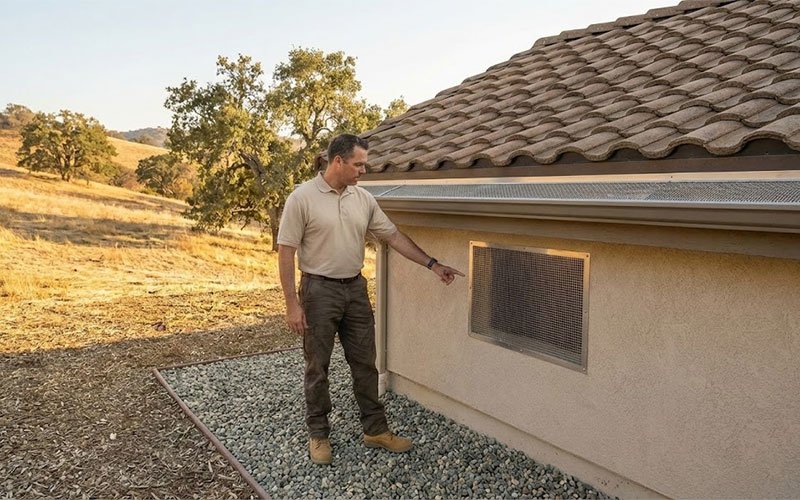
This is the #1 vulnerability in older homes (built before 2010). Your attic needs to breathe, so it has vents. However, standard vents often have large mesh openings (1/4 inch or larger).
The Risk: During a wildfire, a storm of burning embers hits the side of your house. If those vents have large openings, embers fly right into your attic, landing on dry insulation and wood framing. The fire starts from the inside.
What We Check: During a CIS Home Inspection, we check if your home has ember-resistant vents with 1/8-inch or finer mesh, or baffle designs that allow air in but keep embers out. If we see wide-mesh vents, we flag it immediately as a priority upgrade.
Roofs and Gutters: The “Kindling” Trap
Your roof is the largest surface area exposed to falling embers. While most homes in Calabasas now have Class A fire-rated roofs (tile, concrete, or asphalt composition), the danger often lies right at the edge.
What We Check:
- Loose Tiles: Gaps in Spanish tile roofs allow embers to slip underneath the tiles to the bird-stops or underlayment.
- Gutter Maintenance: We often find gutters packed with dry leaves and pine needles. This is essentially a fuse attached to your roofline. If an ember lands there, it ignites the debris, which then burns the fascia board and enters the attic.
Windows: The Heat Factor
Did you know windows can break before the fire even touches your house? Intense radiant heat can shatter single-pane windows, allowing the fire to enter your living room.
What We Check: We identify if the home has multi-pane, tempered glass windows. Tempered glass is much more resistant to high heat. If you are buying an older home in the canyon with original single-pane windows, this is a significant safety upgrade you need to budget for.
The “Zone 0” Assessment
While we aren’t landscape architects, we look closely at the “Embrittlement Zone” (0 to 5 feet from the house). We often see:
- Wood mulch right up against the stucco.
- Wooden gates attached directly to the house.
- Juniper or Cypress bushes touching the exterior walls.
In our reports, we point these out as hazards. Replacing wood mulch with gravel or stone in that first 5 feet can save a house.
Peace of Mind in Fire Country
You can’t control the weather, but you can control your home’s defenses. “Home Hardening” isn’t about building a concrete bunker; it’s about fixing the small gaps that embers exploit.
Whether you are buying a new home or have lived in Calabasas for years, a thorough inspection can reveal these invisible risks. Let us help you make your home safer.
Protect your investment from the inside out.
Contact CIS Home Inspections today for a comprehensive evaluation.
📞 (818) 421-5746
🌐 www.cisinspecthomes.com
📍 Serving Calabasas, Malibu, and the Santa Monica Mountains.